The Search for Elements and Principles Continued
I have gotten a little further in my search for the beginnings of the elements and principles in art education. I contacted the big guys, the National Art Education Association, through their website and asked if they knew who wrote the first real list of the elements and principles. I thought for sure they would just know this and give me a date when the NAEA adopted them as their suggested standards. Instead she told me to read the work of Mary Ann Stankiewicz especially her book Roots of Art Education Practice, which is a part of the Davis Publication the Art Education in Practice Series. I purchased a used copy and have really enjoyed reading it, but it still didn't tell me exactly what I wanted to know - just part of it.
The book is really insightful laying out the history of art education, especially the who's and why's of it. I really recommend reading it if you are an art educator and especially if you are interested in the purpose of art education today. Looking into the reasons people thought an art education was important in the past really makes you question why it is important today. When art education started in the late 19th century there were ulterior motives of course: educating people to be able to do design work in the new industrial age, raising up the middle and lower classes to the morals and tastes of the upper classes, and even to create a beautiful uncluttered school setting. There were different segments with different ideas, but the elements and principles seem to come from a group of upperclassmen who were guiding much of the progress of art education: Walter Smith, John Ruskin, Henry Turner Bailey, Arthur Wesley Dow, Denman Waldo Ross , Louis Prang (Art Teaching Manual), Mark Hopkins, Joseph Torrey. Mary Ann Stankiewicz describes Hopkins and Torrey's thoughts thus: "As Hopkins explained, cultivating one mental power would tend to strengthen the rest. Similarly, cultivating sound aesthetic judgement among the better classes could improve the national taste, providing a supportive environment for American Art."
The elements and principles of art were a way for these upper-class men to find a system in the art from Western and other origins that was teachable to their schools and also the middle class. The elements and principles for some had ties to music principles and others literature.
Here are the three major people she talks about in chapter 5. She also talks about the beginning of color theory and schools but since they don't seem tied to any lists of elements and principles of art per se, I am going to leave them out here.
Louis Prang art textbooks: line, mass, color chief element. (page 89) value was kept to three shades light, dark, middle value. Influenced by Dow
Arthur Wesley Dow: line, notan (dark & light), color Dow criticized the separation of representational art and decorative art. Influenced by Japanese art.
Denman Waldo Ross: taught elite men of Harvard, focus on "scientific methods to understanding and explaining art and artistic elements and principles. "Tones (value and color), measures (the size and area of each tone), and shapes were the elements of 2-d design." (page 95)
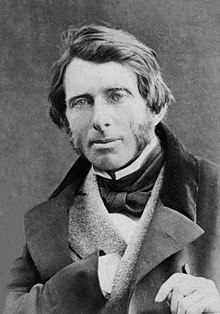
She does mention Ruskin who had a much more solidified list in that time of the principles of art, but does not list his list or talk about him much which confuses me. Here is a link to my post about him and here is the list of his principles: Principality, Repetition, Continuity, Curvature, Radiation, Contrast, Interchange, Harmony. For an explanation of these principles click here.
I have gotten a little further in my search for the beginnings of the elements and principles in art education. I contacted the big guys, the National Art Education Association, through their website and asked if they knew who wrote the first real list of the elements and principles. I thought for sure they would just know this and give me a date when the NAEA adopted them as their suggested standards. Instead she told me to read the work of Mary Ann Stankiewicz especially her book Roots of Art Education Practice, which is a part of the Davis Publication the Art Education in Practice Series. I purchased a used copy and have really enjoyed reading it, but it still didn't tell me exactly what I wanted to know - just part of it.
The book is really insightful laying out the history of art education, especially the who's and why's of it. I really recommend reading it if you are an art educator and especially if you are interested in the purpose of art education today. Looking into the reasons people thought an art education was important in the past really makes you question why it is important today. When art education started in the late 19th century there were ulterior motives of course: educating people to be able to do design work in the new industrial age, raising up the middle and lower classes to the morals and tastes of the upper classes, and even to create a beautiful uncluttered school setting. There were different segments with different ideas, but the elements and principles seem to come from a group of upperclassmen who were guiding much of the progress of art education: Walter Smith, John Ruskin, Henry Turner Bailey, Arthur Wesley Dow, Denman Waldo Ross , Louis Prang (Art Teaching Manual), Mark Hopkins, Joseph Torrey. Mary Ann Stankiewicz describes Hopkins and Torrey's thoughts thus: "As Hopkins explained, cultivating one mental power would tend to strengthen the rest. Similarly, cultivating sound aesthetic judgement among the better classes could improve the national taste, providing a supportive environment for American Art."
The elements and principles of art were a way for these upper-class men to find a system in the art from Western and other origins that was teachable to their schools and also the middle class. The elements and principles for some had ties to music principles and others literature.
Here are the three major people she talks about in chapter 5. She also talks about the beginning of color theory and schools but since they don't seem tied to any lists of elements and principles of art per se, I am going to leave them out here.
Louis Prang art textbooks: line, mass, color chief element. (page 89) value was kept to three shades light, dark, middle value. Influenced by Dow
Arthur Wesley Dow: line, notan (dark & light), color Dow criticized the separation of representational art and decorative art. Influenced by Japanese art.
Denman Waldo Ross: taught elite men of Harvard, focus on "scientific methods to understanding and explaining art and artistic elements and principles. "Tones (value and color), measures (the size and area of each tone), and shapes were the elements of 2-d design." (page 95)
She does mention Ruskin who had a much more solidified list in that time of the principles of art, but does not list his list or talk about him much which confuses me. Here is a link to my post about him and here is the list of his principles: Principality, Repetition, Continuity, Curvature, Radiation, Contrast, Interchange, Harmony. For an explanation of these principles click here.
So I know the roots of the elements and principles, but I still don't know where our solidified list comes from. I I have a feeling it is from NAEA itself, but that is just a feeling. If anyone knows when THE LIST was written and why let me know!
The page numbers in this post refer to pages in Roots of Art Education Practice by Mary Ann Stankiewicz.